
Tommy Hilfiger | TOMMY HILFIGER X FRGMT
Share
Share
Copy
Tommy Hilfiger and Hiroshi Fujiwara Q&A
- You both built your careers by looking beyond fashion to music, art and the creative scenes around you. How have those different cultural influences shaped this collaboration?
Tommy Hilfiger: Music and culture have influenced me from the very beginning. When I opened People’s Place at 18, it wasn’t just about selling clothes — it was a place to discover new styles, hear new sounds and be part of what was happening in culture.
Hiroshi and I come from different places, but we share that curiosity about what’s happening around clothing — the ideas, the people and the creative movements shaping how we dress. That common ground gave us a natural connection when we started working together.
Hiroshi Fujiwara: I’ve discovered a lot of things through traveling. As a teenager, I was heavily influenced by punk music and the culture around London. When I finally went to London in the ’80s, people there told me I should go to New York. They said, “New things are happening in New York.” So, I went. I think I’ve always been curious about what’s happening somewhere else, outside of what I already know. That curiosity still influences the way I approach projects today.
- The collection goes back to TOMMY HILFIGER’s ’90s era. What is it about the style and attitude of that decade that still feels relevant today?
Tommy Hilfiger: In the ’90s, we wanted to open up traditional American prep and make it feel more fun, colorful and accessible. We played with vibrant color and oversized proportions, taking familiar classics and giving them a more irreverent attitude. Then artists and rappers embraced those pieces and started wearing them in their own way, taking the look somewhere we could never have planned. That freedom was an incredible part of the decade, and I love seeing a new generation respond to it today.
Hiroshi Fujiwara: I traveled to New York in the late ’80s and discovered hip-hop. Later, when I became a DJ, I started noticing that many hip-hop artists were wearing Tommy, but in their own way. They wore it very baggy and oversized, which gave the clothes a completely different impression from how they were originally designed. I liked that attitude. It was very memorable. 3. You each have very recognizable design codes. How did you decide what should remain unmistakably Tommy and where Hiroshi could disrupt or reinterpret it?
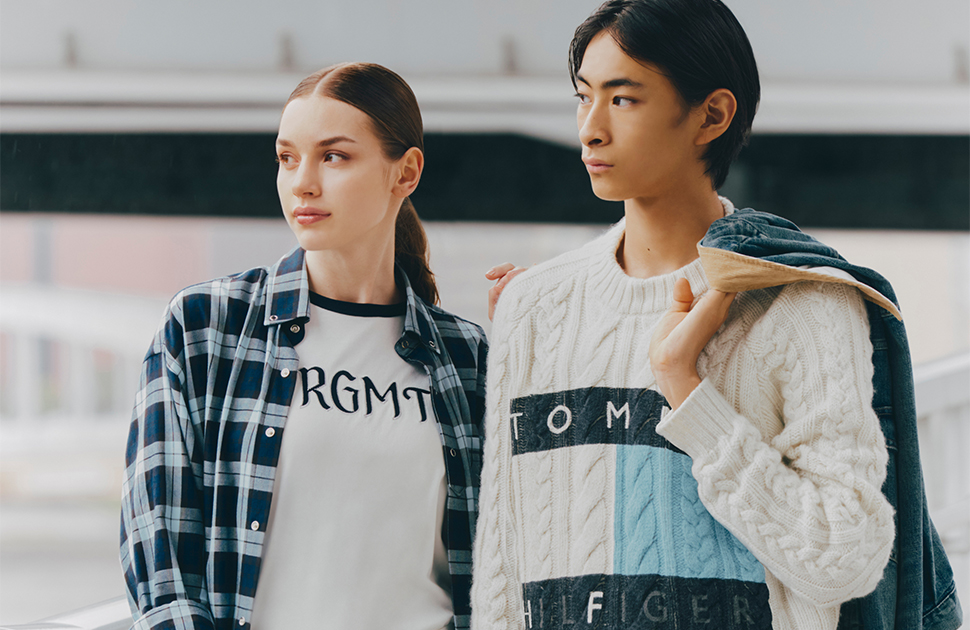
Tommy Hilfiger: We started in our archive with pieces that are fundamental to the Tommy wardrobe — the rugby, varsity jacket, chinos and sailing pieces — and invited Hiroshi to put his perspective on them. That’s always been the exciting part of collaboration for me: taking something you know and opening it up to another point of view. His precision and restraint against our bold American prep creates an interesting tension, from the light blue Flag to the thunderbolt graphics and elevated fabrications. The result feels unmistakably connected to both of us, but fresh because of what we brought out in each other.
Hiroshi Fujiwara: I started the project by going through the archives and learning more about Tommy Hilfiger’s design codes and heritage. I wanted to see how much I could change while still respecting what the brand has built over the years. It was about finding the right balance. My role was to create something that feels different but still has Tommy’s DNA.
- What is your favorite piece from the collection, and what makes it stand out to you?
Tommy Hilfiger: I love the varsity jacket. It’s been part of our world for decades and represents so much of what I love about American style — sport, prep and youth culture all coming together. In this collection, the color palette gives it a fresh identity while keeping those classic varsity codes at its core.
Hiroshi Fujiwara: My favorite is the Regatta jacket. To me, it’s one of those classic Tommy Hilfiger pieces from the archive, but it has my own reinterpretation. I like that balance.
- This collaboration connects New York and Tokyo, heritage and contemporary design, and different generations of style. What do you hope people take from it?
Tommy Hilfiger: I’ve always believed great things happen when you bring different worlds together. I love that someone who remembers these pieces from the ’90s can recognize the heritage, while someone discovering Tommy or FRGMT today can see something entirely new. The collection crosses New York and Tokyo, past and present, and generations of style. That’s what makes it exciting to me — the classics keep moving forward.
Hiroshi Fujiwara: For some of us, it might feel nostalgic, but for a younger generation, it might feel completely new. I’m interested to see how younger people wear these pieces in their own way.
Share
Share
Copy
- 345 Victoria Ave, Chatswood NSW 2067
- Call us (02) 9422 5300
- Get directions via Google
